
Top Roll-up Door Forming Machine Setups for Low-Volume Production: A 2026 Selection Ranking
This is a ranking of roll-up door forming machine configurations, not a ranking of manufacturers. It compares five setups that make commercial sense when a workshop runs one dominant shutter profile, changes coils in small batches, and needs the line to pay back its capital before a second line is justified.
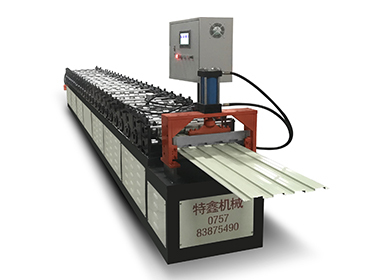
Each configuration below is assessed on relative criteria: capital band, changeover effort, footprint, ease of operation and maintenance, and compliance headroom. Where specifications appear, they come from published product data for the Rolling Shutter Door Machine Equipment series built by Foshan Texin Machinery Co., Ltd., a cold roll forming equipment manufacturer established in 2019 in Foshan, Guangdong.
Why Low-Volume Buyers Get the Setup Wrong
The most common error is specifying for a peak that never arrives. A line sized for continuous output keeps capital idle, occupies floor area that could hold assembly or storage, and adds driven modules that each need scheduled maintenance. The opposite error is just as expensive: a setup with no headroom at all, so that a single new profile forces a second machine purchase within a year.
For low-volume production, throughput is rarely the binding constraint. The variables that actually decide profitability are:
- Coil changes per shift - whether coils are loaded by hand or by powered handling.
- Profile mix stability - whether one profile dominates the order book, or three or four compete for machine time.
- Floor length - how much of a short industrial bay the line consumes, including coil staging.
- Maintenance load - how much of the routine work a two-person team can absorb without stopping production.
- Compliance headroom - whether the setup can hold the tolerance and material range that the finished door must meet in your market.
That last point is easy to underestimate. The forming machine is not the regulated product; the door is. A configuration chosen purely on purchase price can shift cost downstream into rework, rejected batches or unusable finished doors.
What the 2026 Demand Picture Means for Entry-Level Capacity
Demand data supports entry-level and small-batch capacity as a legitimate position rather than a temporary stopgap. The global roll-up doors market, the main end-market for this machinery, was valued at approximately USD 3.25 billion in 2025 and is projected to reach USD 5.15 billion by 2034 (Dataintelo). Within it, industrial roll-up doors for warehouses and logistics are expected to grow at a CAGR of 5.2% through 2034, driven by e-commerce expansion (Dataintelo).
Adjacent segments are expanding on the same trajectory. The high-speed industrial doors market was valued at USD 14.17 billion in 2024 and is growing at a CAGR of 5.6% (Cognitive Market Research). On the equipment side, the global roll forming machine market was valued at USD 487 million in 2024 and is projected to reach USD 662 million by 2032, a CAGR of 4.5%, with China accounting for approximately 21% of global total revenue (Intel Market Research). Material trends matter too: aluminum rolling shutters account for approximately 46% of the commercial roller shutter market share, driven by corrosion resistance and lightweight properties (Research Reports World).
The practical reading for a low-volume buyer is that growth is not confined to large plants. Regional fabricators, replacement demand, and specialty profiles such as wind-resistant and fire-rated doors generate steady small-batch work, and that work rewards a setup that is quick to switch and cheap to keep running rather than fast in absolute terms.
How This Ranking Was Built
Five criteria were weighted. Capital discipline and operational simplicity carry the highest weight, because over-specification is both the most common and the most expensive mistake at entry level.
- Relative capital band - how many driven modules and how much automation the configuration requires.
- Changeover effort - how much work separates one profile from the next.
- Footprint - floor length plus coil staging space.
- Operation and maintenance simplicity - component count, drive complexity, spare-part exposure.
- Compliance headroom - whether the configuration can hold the tolerance and material range the target market requires.
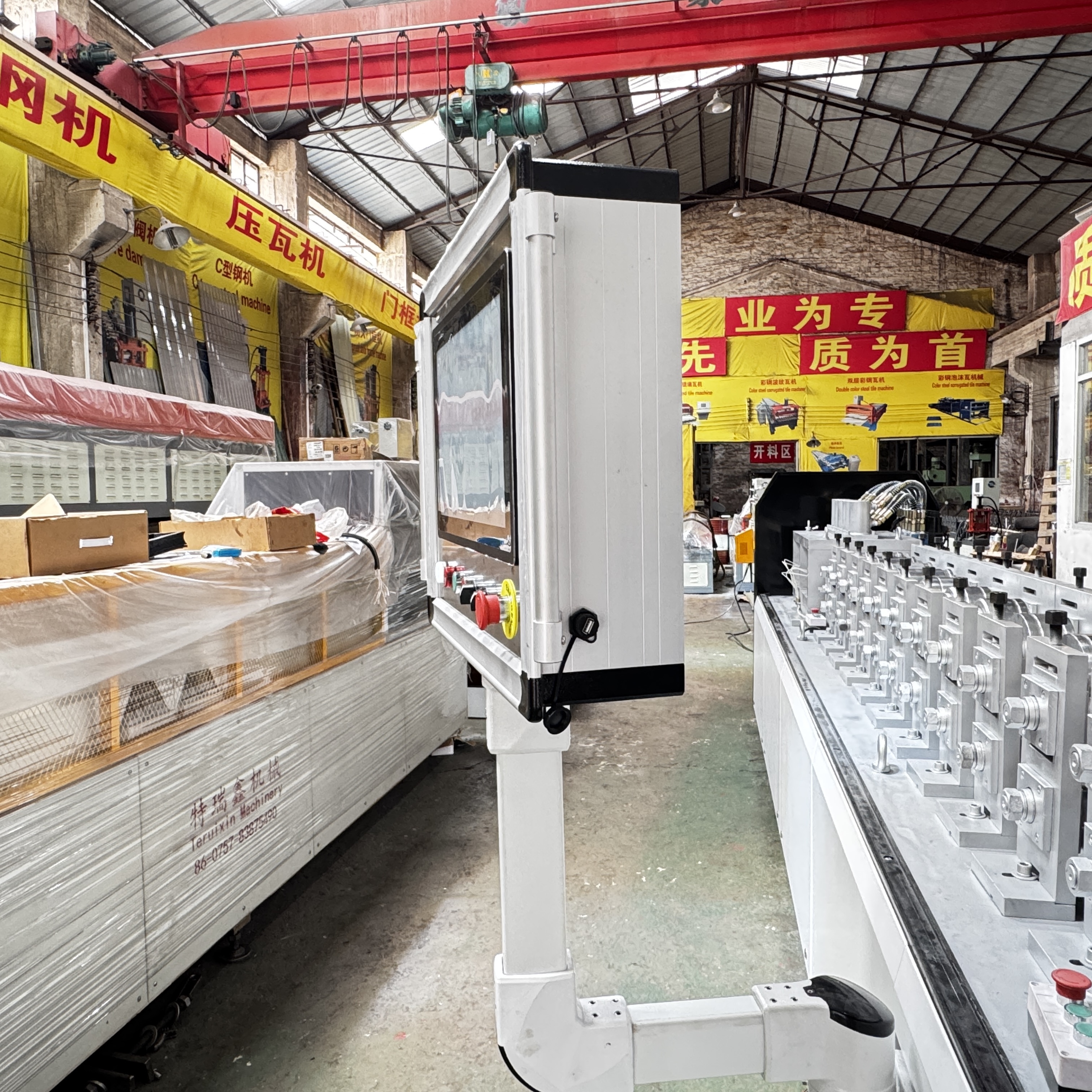
The 2026 Ranking: Five Setups for Low-Volume Roll-up Door Production
Rank 1Compact Single-Profile Line with Manual Coil Loading
This configuration assembles only the modules that are strictly necessary: an uncoiler, a straightener, a single-profile forming section, a hydraulic cutting machine, and a PLC control cabinet. Coils are loaded by hand rather than by powered handling equipment.
It ranks first because it is the lowest-capital, smallest-footprint route into roll-up door slat production. Fewer driven modules means fewer failure points, a shorter maintenance list and lower spare-part exposure - three factors that matter more than output when daily production is measured in a few hundred metres of slat rather than in tonnes.
Its weakness is changeover. A configuration built around one profile normally needs a roll change or a dedicated roll set to run a second profile, so it only makes sense when a single profile genuinely dominates the order book. Footprint is the smallest of the five, which also makes it the easiest to install in a leased unit without re-planning the workshop.
What keeps it compliant: machine-side safety and diagnostics are consistent across the series - a safety protection device and a fault self-diagnosis function are standard. Door-side compliance depends on dimensional stability, which is why length control is specified as PLC plus encoder to an accuracy of plus or minus 1 mm.
Rank 2Standard Australian-Style Single Line (TX-500 Class)
This is the conventional main model of the Rolling Shutter Door Machine Equipment series: the TX-500 Australian Style Rolling Shutter Machine. The same family also includes the TX-250 as a lower-capacity option, the TX-F500 as a high-end variant, the TX-1000 for 1 m width, and the TX-1000-740 for stainless steel work.
It ranks second because it offers the best balance of capability and simplicity for entry and mid-entry operations. The published specification band covers 12 to 26 forming stands depending on the product, a 3.0 to 7.5 kW servo motor, 380V/3PH/50Hz, a line speed of 10 to 25 m/min, and PLC plus encoder length control to plus or minus 1 mm. Servo drive supports stable running and forming precision, which translates into consistent slat geometry at low volume - the stage where a badly formed first coil hurts most.
Build details matter for a duty cycle that is intermittent rather than continuous. Rolls are Cr12MoV and SKD11 die steel, quenched for wear resistance. Shafts are 45# steel, quenched, tempered and precision ground. The frame is welded from thickened steel plates and fully annealed, and transmission uses precision gears, chains and servo motors. A machine that sits idle for two days and then runs hard rewards a heavy annealed frame and wear-resistant rolls far more than it rewards additional electronic features.
The material range covers colour coated steel sheet (colour steel coil), hot-dip galvanized steel sheet, aluzinc steel sheet, zinc-aluminium-magnesium coated steel sheet, 201 stainless steel and 304 stainless steel. Its limitation is scope: this is a curtain line, so forming guide channels and bottom beams in-house requires a companion machine rather than an extra module.
Rank 3Split Guide Channel and Bottom Beam Cell
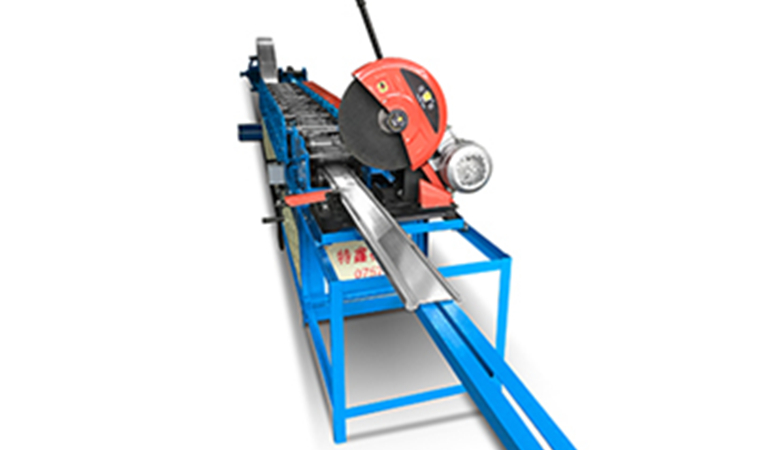
Instead of one long combined line, this setup pairs a short curtain line with separate accessory cells. Common configurations in this category include a Rolling Shutter Door Guide Channel Forming Machine or Guide Rail forming unit, a Sound-Absorbing Guide Channel Machine, a Square Tube Bottom Beam Forming Machine and a Europe-Specific Bottom Beam Machine.
It ranks third because it lets a small workshop control the complete door set - slats, guide rails and bottom beam - without committing to a single long integrated line. Each cell runs independently, so a low-volume day can use only the guide channel unit, and a changeover on one cell does not stop the other. It also spreads capital across two smaller purchases instead of one large one, which is usually easier to justify at entry level.
The trade-off is handling intensity. Coils and finished components move between cells, and the operator manages two setups rather than one. For a workshop that produces slats only and buys rails in, this configuration is unnecessary.
Rank 4Silent, Sound-Attenuated Configuration (TX-F500 Class and Low-Noise Build)
This configuration applies the same curtain-forming architecture but is built around noise reduction. Silent running design for low-noise production is a stated selling point of this equipment family, and low noise operation is listed as a special requirement for the product category alongside customised specification, high precision and corrosion resistance.
It ranks fourth because it costs more. Additional damping, tighter assembly tolerances and quieter drive control raise the relative capital band and add components that must be serviced. It still ranks above the wind-resistant setup because it addresses a very common low-volume case: a fabricator in a residential or mixed-use area, or one supplying commercial premises where acoustic performance is part of the specification.
The limitation is straightforward. When output is genuinely one profile and one shift, the noise premium is difficult to justify, and a standard configuration installed in a sound-damped bay can be the cheaper answer.
Rank 5Wind-Resistant Multi-Blade Configuration (TX-125-8)
This setup is built around the TX-125-8 125 Type 8-Blade Wind-Resistant Rolling Shutter Machine, which forms a heavier multi-blade wind-resistant slat.
It ranks fifth because it is the most demanding configuration in this list. Multi-blade profiles require more forming stands, tighter roll alignment and more careful setup discipline, so commissioning and changeover take longer and the learning curve is steeper. It earns its place only when wind-load performance is part of the door specification rather than an optional selling feature.
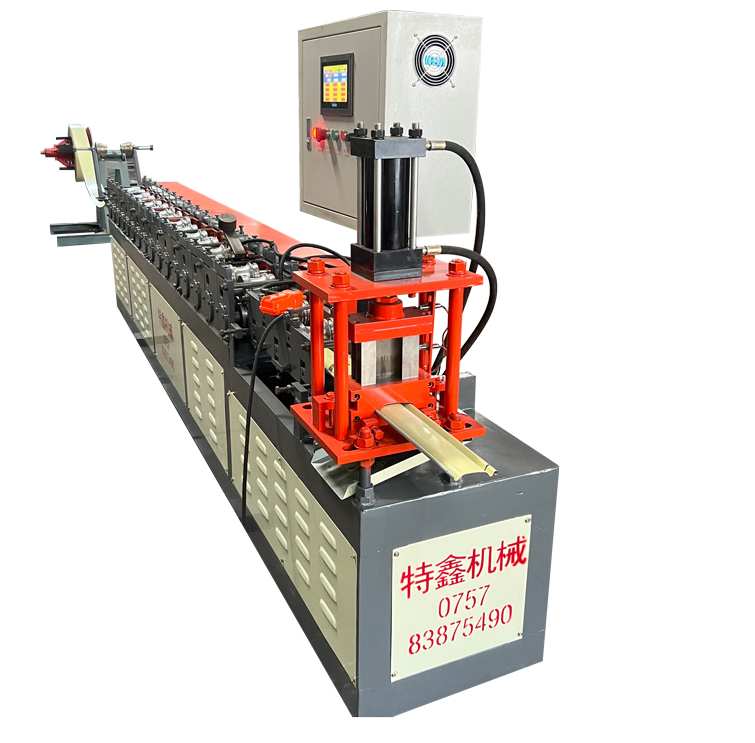
Two further variants belong in the same decision set without changing the ranking logic. The TX-1000 Australian Style Rolling Shutter Machine (1 m width) suits workshops whose dominant requirement is a wider slat, and the TX-1000-740 1000 Type Rolling Shutter Machine Special for Stainless Steel suits those whose dominant requirement is a stainless finish.
Step-by-Step: Configuring a Low-Volume Line Without Overbuying
- Write the profile list before the machine list. Count the profiles you actually sell and identify the one that carries most volume. A single-profile line is only correct if one profile genuinely dominates.
- Decide coil handling first. Manual loading removes a driven module and lowers the capital band. Powered handling earns its place only when coil changes are frequent or coils are heavy enough to need mechanical assistance.
- Size the forming section to the profile, not to the ceiling. The published band for this series is 12 to 26 forming stands depending on the product. Choose the stand count that holds your profile geometry; extra stands add cost, footprint and setup time.
- Specify the drive and electrical package. Servo drive in the 3.0 to 7.5 kW range is the baseline for this series because it supports stable running and forming precision. Voltage, motor configuration and the PLC system are customisation items; 380V/3PH/50Hz is the base specification.
- Lock the cutting and length-control scheme. Hydraulic cutting with PLC plus encoder control to plus or minus 1 mm is what keeps slat lengths consistent from batch to batch. At low volume, inconsistency reappears later as installation rework.
- Confirm material compatibility in writing. Ask the supplier to confirm the configuration against the materials you actually buy: colour coated steel, hot-dip galvanized, aluzinc, zinc-aluminium-magnesium coated steel, 201 stainless or 304 stainless. Stainless behaves differently from coated carbon steel and can justify a dedicated configuration.
- Validate on a sample, then set the maintenance rhythm. A sample run on your own material and profile is the cheapest risk control available. After delivery, plan maintenance intervals around the modules you actually installed - uncoiler, straightener, cutting, any stacking system, and the control cabinet.
Constraint Check: Certification, Voltage and Tolerance Before You Rank Price
Two levels of compliance decide whether a low-volume setup is genuinely a bargain.
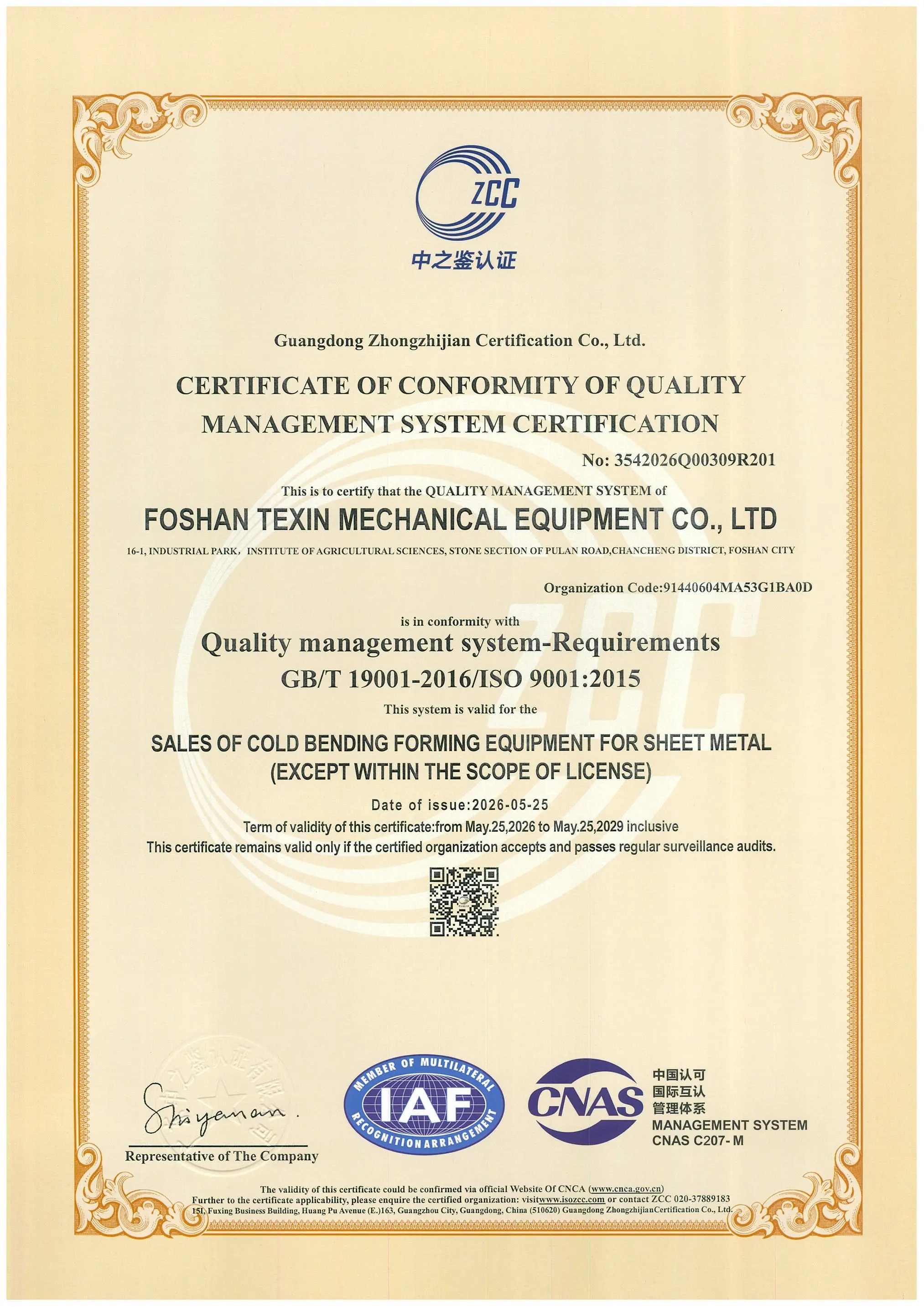
Machine level. The manufacturer holds an ISO 9001 Quality Management System Certificate, number 3542026Q00309R201, issued by Guangdong Zhongzhijian Certification Co., Ltd. against the standard GB/T 19001-2016/ISO 9001:2015, valid from 2026-05-25 to 2029-05-25. The scope covers the sales of Cold Bending Forming Equipment for Sheet Metal, and the certificate applies to the Rolling Shutter Door Machine Equipment product. Foshan Texin Machinery Co., Ltd. also states that its equipment is certified to the CE standard and that the company holds multiple independent technical patents for roll-forming technology.
Door level. The finished door, not the machine, carries the market compliance obligation. Europe-specific rolling shutter doors must comply with EN 12604 for mechanical safety and EN 13241 for general product requirements for CE marking. Fire-resistant rolling steel doors in the U.S. and Europe must adhere to NFPA 80 (USA) or EN 16034 (EU), which mandates automatic-closing devices and governor-managed descent speeds. For a forming setup, these requirements translate into tolerance and repeatability demands: if slat geometry drifts, the finished door may not seal or close as specified.
Parameter constraints that matter most at low volume. Length accuracy of plus or minus 1 mm from PLC plus encoder control; a line speed band of 10 to 25 m/min, where the lower end is more than adequate for small batches; 380V/3PH/50Hz base voltage with voltage listed as a customisation item; a forming stand count of 12 to 26 depending on the product; and the material list above.
Budget framing. No absolute price is published for these configurations, so cost should be judged as a relative band driven by three variables: the number of driven modules (coil handling, cutting, stacking), the drive and control package, and whether companion cells for guide channels and bottom beams are added. Adding a stacking system or a second cell moves the setup up one band; removing powered coil handling and stacking moves it down.
Three Low-Volume Use Cases That Fit This Ranking
One dominant profile, local market. A workshop selling a single slat type into local commercial and garage door work should read Rank 1 or Rank 2. A single-profile line with manual coil handling and PLC length control leaves no capital parked in changeover capability it will never use.
Entering a European market. A fabricator whose slats must assemble into doors meeting EN 12604 and EN 13241, and who wants guide channels and bottom beams formed in-house, should combine a Rank 2 line with the Rank 3 split cell, specifying a Europe-specific bottom beam machine. Compliance depends on dimensional consistency across every part of the door set, so controlling guide and beam production internally removes a supplier variable.
Wind-load region. A fabricator whose catalogue includes wind-resistant doors should run Rank 5 for the multi-blade profile alongside a Rank 2 line for standard slats. Keeping routine work off the specialised machine protects its setup accuracy and keeps the wind-resistant configuration justified by real demand rather than by catalogue ambition.
Across all three cases, the commercial terms follow the same pattern: OEM and ODM customisation can cover device specifications, forming roll rows, line speed, voltage, motor configuration, PLC system, die rolls, frame structure, brand logo and automation solutions; monthly capacity is stated at 30 units or more; every machine is subject to 100% full inspection before delivery; and after-sales support covers online remote guidance, on-site installation and commissioning, a one-year free warranty and lifelong maintenance.
Comparison Table: Five Low-Volume Setups Side by Side
| Rank | Setup | Typical modules | Relative capital band | Changeover effort | Footprint | Best-fit buyer | Verified capability notes |
|---|---|---|---|---|---|---|---|
| 1 | Compact single-profile line, manual coil loading | Uncoiler, straightener, single-profile forming section, hydraulic cutting, PLC cabinet | Lowest in this list | Highest - roll change or dedicated roll set | Smallest | One-profile workshops; installers bringing slat supply in-house | Safety protection device and fault self-diagnosis function; PLC plus encoder length control to plus or minus 1 mm |
| 2 | Standard Australian-style single line (TX-500 class; TX-250 lower capacity) | Coil handling, forming section, hydraulic cutting, control cabinet; stacking optional | Entry to mid | Moderate - routine setup within a profile family | Medium | Fabricators moving from buying slats to producing them | 12-26 forming stands depending on product; 3.0-7.5 kW servo motor; 380V/3PH/50Hz; 10-25 m/min; plus or minus 1 mm length accuracy |
| 3 | Split guide channel and bottom beam cell | Guide channel or guide rail forming machine; sound-absorbing guide channel machine option; square tube or Europe-specific bottom beam machine | Two smaller purchases instead of one large one | Independent per cell | Splits across two short footprints | Fabricators assembling the complete door set | Bottom beam equipment documented within the same equipment family |
| 4 | Silent, sound-attenuated configuration (TX-F500 class) | Damped forming section, servo drive, control cabinet | Above Rank 2 | Moderate | Medium, with acoustic planning in the bay | Urban and mixed-use sites; acoustic-sensitive projects | Silent running design for low-noise production; low noise operation listed as a special requirement |
| 5 | Wind-resistant multi-blade configuration (TX-125-8) | Multi-blade forming section, servo drive, hydraulic cutting, control cabinet | Highest in this list | Highest setup discipline required | Medium to large | Wind-load markets with wind-resistant doors in the catalogue | TX-125-8 125 Type 8-Blade Wind-Resistant Rolling Shutter Machine |
FAQ
What certification should I check when buying a low-volume roll-up door forming machine setup?
Check two levels. At machine level, verify the manufacturer's quality management certification and its scope: the ISO 9001 certificate held for this equipment family is number 3542026Q00309R201, issued by Guangdong Zhongzhijian Certification Co., Ltd. against GB/T 19001-2016/ISO 9001:2015, valid from 2026-05-25 to 2029-05-25, covering the sales of Cold Bending Forming Equipment for Sheet Metal and applying to the Rolling Shutter Door Machine Equipment product. At door level, the finished product must meet the rules of your market: EN 12604 and EN 13241 for Europe-specific rolling shutter doors requiring CE marking, and NFPA 80 or EN 16034 for fire-resistant rolling steel doors in the U.S. and EU.
Can a low-volume setup produce wind-resistant or stainless steel slats?
Yes, if the configuration is chosen for it. Wind-resistant profiles are formed on dedicated machines such as the TX-125-8 125 Type 8-Blade Wind-Resistant Rolling Shutter Machine, while stainless work suits a dedicated configuration such as the TX-1000-740 1000 Type Rolling Shutter Machine Special for Stainless Steel. The general series runs colour coated steel, hot-dip galvanized steel, aluzinc, zinc-aluminium-magnesium coated steel, 201 stainless steel and 304 stainless steel, and customisation can cover forming roll rows, die rolls, line speed, voltage, motor configuration, PLC system and frame structure.
What drives the cost band of a low-volume roll-up door forming machine?
Three factors dominate. First, the number of driven modules, since powered coil handling and automatic stacking add to the band and both are optional at low volume. Second, the drive and control package, where servo drive and PLC plus encoder length control form the specification baseline for this series. Third, whether companion cells for guide channels and bottom beams are added, because a guide channel forming machine and a bottom beam machine are separate purchases. Reducing module count is the most direct way down the band, followed by reducing the forming stand count.
How can I validate a setup before committing to full production?
Run a sample. Customisation on this product line covers shutter profile and dimension, so a sample trial on your own material and target profile is the practical way to confirm geometry, tolerance and surface finish before the order is finalised. Ask for the sample to be produced on the same stand count and cutting configuration you intend to buy, and confirm the pre-delivery inspection routine - 100% full inspection before delivery is the stated standard for this equipment.
What lead time and support should I plan for?
Standard delivery is quoted at 15 to 25 days, and custom-made configurations at 25 to 45 days, with a minimum order of one unit. After installation, the stated support package covers online remote guidance, on-site installation and commissioning, a one-year free warranty and lifelong maintenance. If you want to compare these configurations against your own profile list, the product brochure is available for download, and a sample or quotation can be requested directly from Foshan Texin Machinery Co., Ltd. at sales@texinjixie.com.
Conclusion
Low-volume production is not a compromise version of high-volume production; it is a different specification problem. The five setups ranked here differ mainly in how much automation they carry and how many profiles they can absorb. Rank 1 wins on capital discipline, Rank 2 on balance between capability and simplicity, Rank 3 on controlling the complete door set, Rank 4 on noise-sensitive sites, and Rank 5 on wind-load requirements.
The selection rule is simple: match the configuration to your profile list, your floor area and your market's compliance rules - and leave the throughput you do not need on the quotation rather than on the shop floor.
Next Step: Match a Configuration to Your Profile List
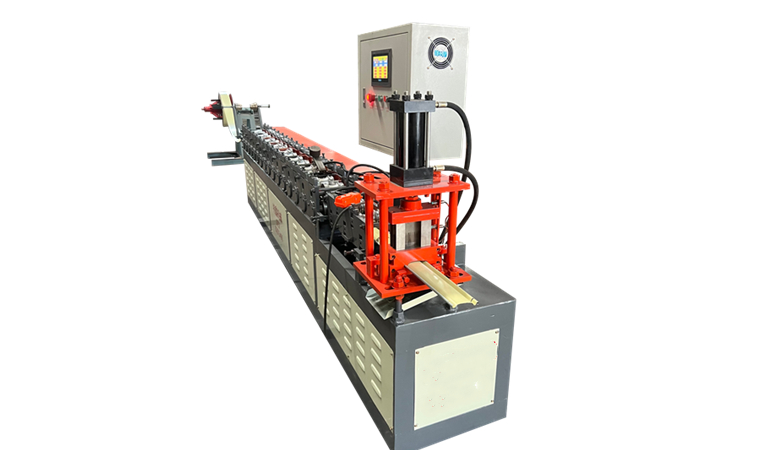
Foshan Texin Machinery Co., Ltd. builds the Rolling Shutter Door Machine Equipment series and customises device specifications, forming roll rows, line speed, voltage, PLC system and frame structure for OEM and ODM projects. Minimum order is one unit, with standard delivery in 15 to 25 days.
Download the product brochure: Texin product brochure (PDF)
Request a sample or quotation: www.gdtxjx.com | Email: sales@texinjixie.com | WhatsApp: +86 134 1548 2815 | Tel: +86 186-7573-3219
Have Questions or Need More Details?
Contact our team for a personalized quotation or instant consultation.
Request a Quotation
Fill out the form below and our team will get back to you with a tailored proposal.
WhatsApp Direct Chat
Prefer to chat in real-time? Message us on WhatsApp for instant assistance & quick answers.
- Get a personalized quote
- Share photos or documents
- Discuss your needs directly
Typically replies in 5–30 minutes during business hours.