
Material Thickness and Yield Strength: How They Define Roll-up Door Panel Forming
Panel quality on a roll-up door line is decided before the first roll turns. Strip width, strip thickness and yield strength set the bending load at every forming station, and those three inputs — not the profile drawing alone — determine how much rigidity the machine needs in its shafts, frame, rolls and drive.
Two coils can be slit to the same nominal panel width, run through the same line, and still leave the machine as visibly different panels. One comes out flat, square and consistent; the other shows edge wave, bow, twist or a drifting lock seam. In most of these cases the profile drawing is not the problem. The difference sits in the material — how wide the strip is, how thick it is, and how much force is required to bend it permanently.
This guide explains, at a principle level, how those three parameters translate into machine requirements such as roll shaft diameter, the number of forming stations, roll material and heat treatment, frame stiffness and drive power. It is written for engineers and production managers who need to judge whether a quoted roll-up door forming machine is genuinely rigid enough for the material they intend to run.
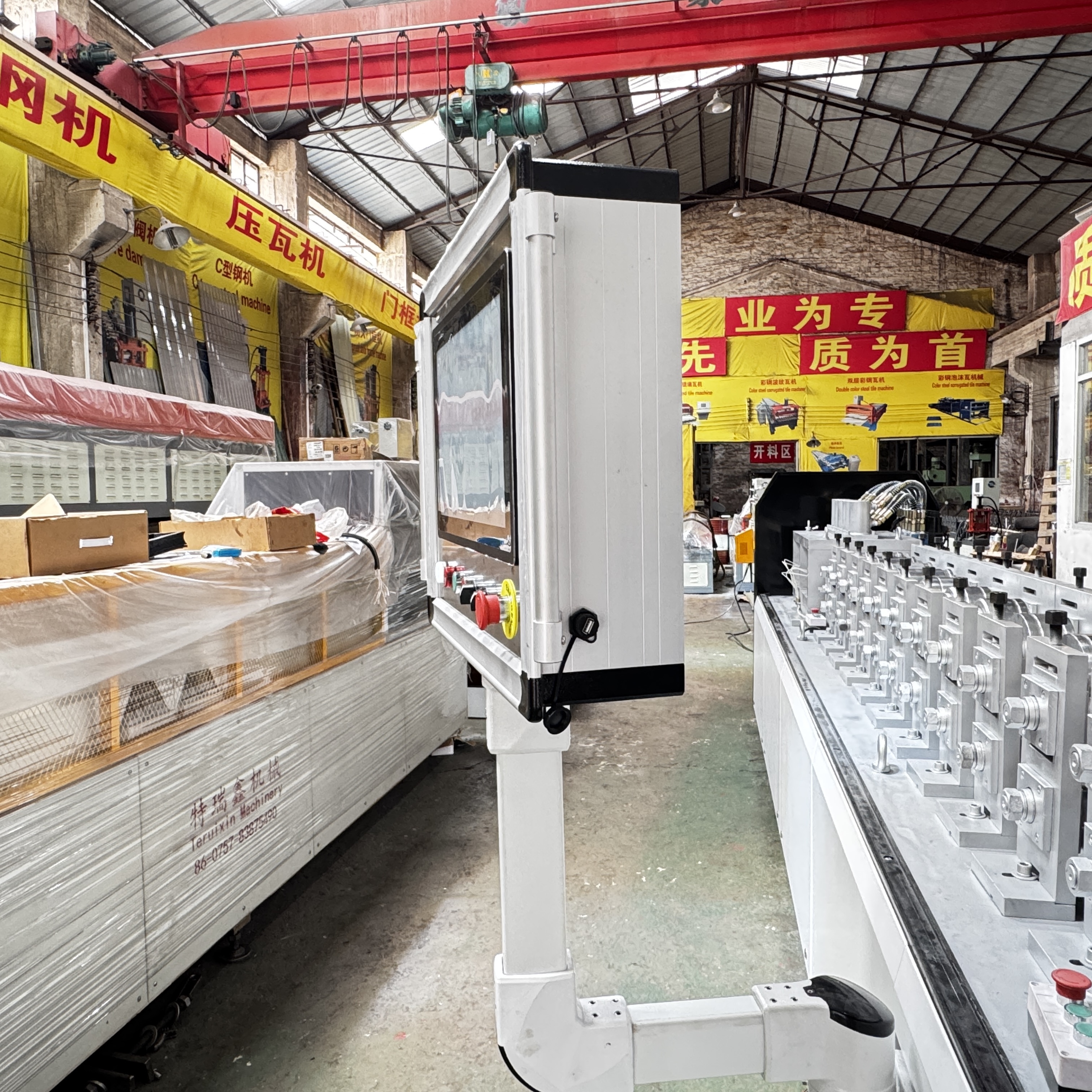
A roll-up door panel forming line is specified around a material envelope, not around a single coil grade or a single profile drawing.
Problem Definition: Why Two Lines With the Same Profile Behave Differently
A roll forming line does not shape a panel in one action. It bends a moving strip progressively across a sequence of passes, taking the material a little closer to the finished section at each station. The force required at each pass depends on three things: the width of strip being bent at that pass, the material thickness, and the material yield strength — the stress at which the steel stops springing back and begins to deform permanently.
When a line is evaluated only against the finished profile and the required output speed, those three inputs stay hidden inside the quotation. Production problems then usually appear in one of four places:
- Edge wave and bow — the strip is bent beyond what the rolls can hold, so the edges stretch while the centre does not.
- Excessive springback — the panel opens up after the last station because the rolls did not overbend enough to compensate for elastic recovery.
- Twist and oil-canning — uneven bending across the width, typically a symptom of shaft deflection or frame flex under load.
- Drifting cut length — the strip hesitates or slips in the line, so the encoder-controlled cut moves outside tolerance.
Each of those symptoms is a rigidity question before it is a settings question. Rigidity cannot be read off a price list or a profile drawing. It has to be assessed against the material envelope the line is expected to run: the strip widths, the thickness range and the yield strength range that the door programme actually requires.
Industry Background: A Wider Material Envelope on One Production Floor
The commercial context makes that assessment more important rather than less. The global roll-up doors market — the main end market for this type of forming equipment — was valued at approximately USD 3.25 billion in 2025 and is projected to reach USD 5.15 billion by 2034, according to Dataintelo. The roll forming machine market itself was valued at USD 487 million in 2024 and is projected to reach USD 662 million by 2032, a CAGR of 4.5%, according to Intel Market Research. China accounts for approximately 21% of global roll forming machine revenue, again according to Intel Market Research.
That growth is not concentrated in a single panel type. Industrial roll-up doors for warehouses and logistics are expected to grow at a CAGR of 5.2% through 2034, driven by e-commerce expansion (Dataintelo). Aluminium rolling shutters account for approximately 46% of the commercial roller shutter market share, reflecting demand for corrosion resistance and lower weight (Research Reports World). At the same time, Europe-specific rolling shutter doors must comply with EN 12604 for mechanical safety and EN 13241 for general product requirements for CE marking, while fire-resistant rolling steel doors in the U.S. and Europe must adhere to NFPA 80 or EN 16034, which mandate automatic-closing devices and governor-managed descent speeds.
The practical consequence for a door manufacturer is that one line is increasingly expected to run several material families: colour coated steel sheet, hot-dip galvanized steel sheet, aluzinc steel sheet, zinc-aluminium-magnesium coated steel sheet, and in some cases 201 or 304 stainless steel sheet — across different thicknesses and strength grades. A machine specified for only one coil will not stay competitive. A machine specified only for the profile will not run reliably at all.
Detailed Solution: How Strip Width, Thickness and Yield Strength Map to Machine Rigidity
Strip width sets the span the shaft has to survive
Strip width is the first constraint, because it defines how far the roll shafts are unsupported between bearing housings. Bending a wide strip puts the shafts under a bending moment that grows with both the strip width and the force per unit width. If the shaft diameter is small relative to that span, the shaft deflects. A deflection measured in hundredths of a millimetre on each side is enough to make a lock seam drift and a guide channel engagement inconsistent from one panel to the next.
The width question is therefore really a stiffness question. Longer shafts generally call for larger diameters and more robust bearing housings, and the frame carrying them has to resist the same load without measurable flex.
Thickness sets the number of passes and the power requirement
Every forming station can only apply a limited amount of bend before the outer fibre of the strip is over-stressed. As material thickness increases, the total amount of bend that has to be distributed across the line grows, while the safe increment per pass does not. The typical outcome is a longer line: more forming stations, spreading the same final geometry across more and smaller steps.
Drive power follows the same logic. For a given strip width and yield strength, bending force rises with thickness, and the drive must deliver that force continuously at line speed without stalling or losing synchronisation between passes. Cut-off tooling is affected as well, because there is more material to separate at the shearing or punching stage.
Yield strength sets the overbend allowance
Yield strength determines how much the material springs back. Higher-yield strip recovers more of its elastic deformation, so each bend has to be taken slightly past the target angle for the panel to relax into the correct final shape. The stiffer the material, the more overbend the roll design needs, and the more stations are typically required to apply that overbend progressively rather than in one aggressive step.
Higher yield strength also raises the reaction force on rolls and shafts, which is why roll pressure, bearing capacity and shaft sizing are specified together rather than independently.
Roll material and heat treatment decide whether the line holds its setting
Rigidity is not only structural. Rolls that wear or deform lose the geometry they were ground to. In practice, rolls are produced from tool steels such as Cr12MoV or SKD11 die steel, quenched for wear resistance, while shafts are made from 45# steel that is quenched, tempered and precision ground. Frames welded from thickened steel plates are fully annealed to relieve internal stress, so the machine does not move after assembly. Transmission is handled by precision gears, chains and servo motors, which keep the passes synchronised at operating speed.
How these parameters are handled in practice
For rolling shutter door equipment, forming lines are commonly quoted with 12 to 26 forming stands depending on the product, driven by 3.0–7.5 kW servo motors on a 380V/3PH/50Hz supply, running at 10–25 m/min, with panel length controlled by a PLC plus encoder to an accuracy of ±1 mm. The position of a given line inside that station range is not arbitrary: the number of stands is the main variable that absorbs differences in thickness and yield strength between one door programme and another.
Foshan Texin Machinery Equipment Co., Ltd. is a cold roll forming equipment manufacturer established in 2019 and based in Foshan, Guangdong, China, operating from a 5,200 ㎡ production plant with 35 employees, a 10-engineer R&D team and an annual output of 80 units, with 45% of output exported to Southeast Asia, the Middle East, Africa and Europe. Customization under OEM and ODM models covers device specifications, forming roll rows, line speed, voltage, motor configuration, PLC system, die rolls, frame structure, brand logo and automation solutions, which is how the station count, shaft sizing and roll design are matched to a buyer's specific strip width, thickness and yield strength range rather than to a generic profile. The company is certified to the ISO 9001 quality management system under certificate number 3542026Q00309R201, issued on 2026-05-25 by Guangdong Zhongzhijian Certification Co., Ltd. against the GB/T 19001-2016 / ISO 9001:2015 standard and valid until 2029-05-25, and reports certification to the CE standard together with independent technical patents for roll forming technology.
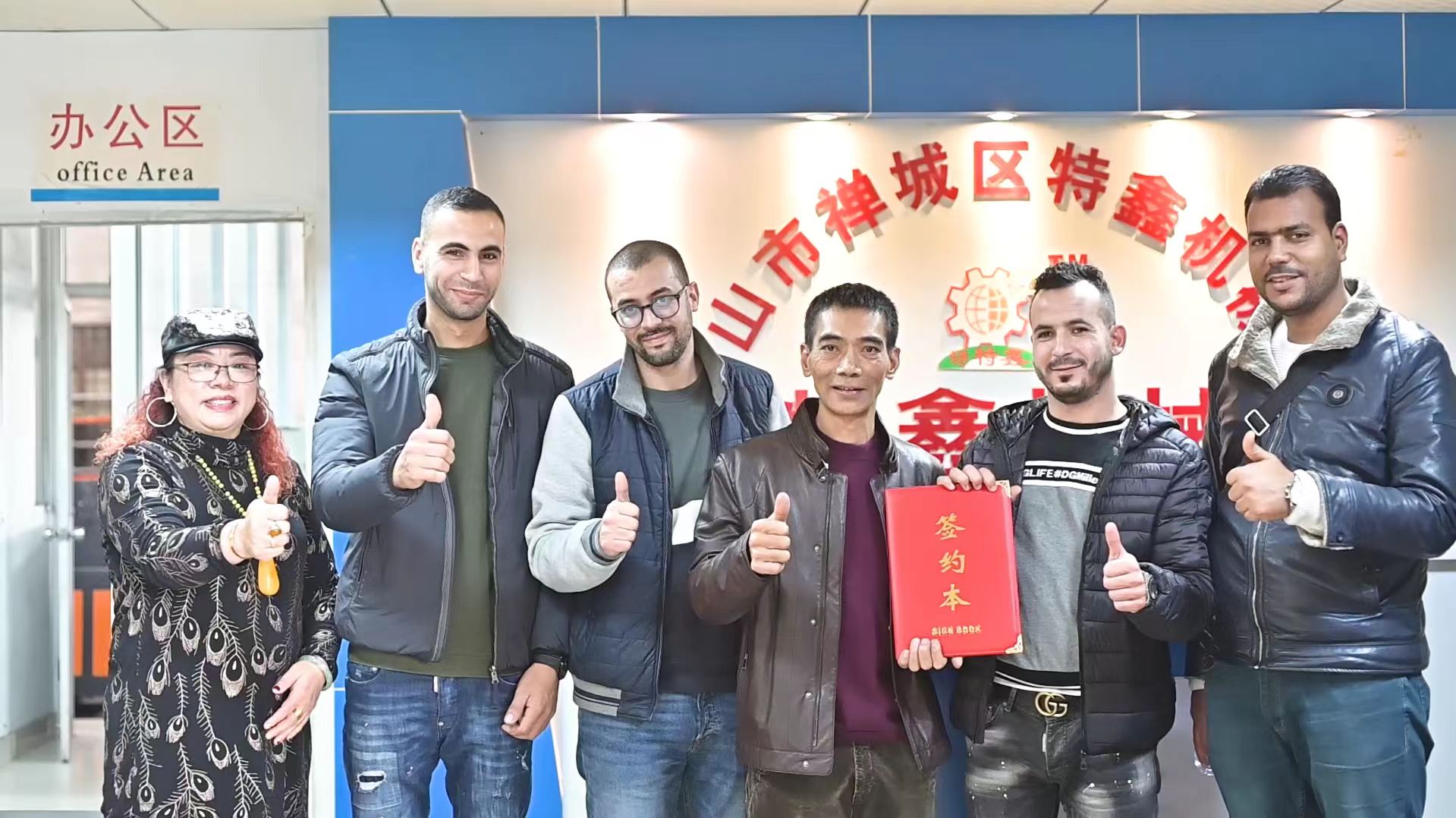
Station count, shaft sizing and roll design are matched to a defined material envelope rather than to one profile drawing.
Step-by-Step: How Engineers Should Assess Line Rigidity
The following sequence turns the principles above into an evaluation procedure that can be applied to any quoted roll-up door forming machine. It works from material inputs toward machine features, which is the reverse of the order most quotations are presented in.
Step 1 — Define the material envelope, not a single coil
Write down the narrowest and widest strip width, the thinnest and thickest material, and the lowest and highest yield strength the line must handle over the next few years. Include the substrate types in play, from colour coated and hot-dip galvanized sheet through aluzinc, zinc-aluminium-magnesium coated sheet and stainless grades. The heaviest combination in that envelope is the one that sizes the machine.
Step 2 — Convert the envelope into a bending load range
For each pass position, the load depends on the width of material being bent at that pass, the thickness and the yield strength. The upper end of the envelope gives the maximum load the shafts, bearings and frame must carry without deflecting beyond the tolerance of the panel.
Step 3 — Map the load to station count
Ask how many forming stations are proposed and why. A line quoted at the low end of a station range for a heavy or high-strength panel will usually have to bend more per pass, which increases the risk of edge wave, marking and uncontrolled springback.
Step 4 — Check shaft diameter against unsupported span
Confirm the roll shaft diameter and the bearing arrangement for the widest strip in the envelope. Shaft stiffness scales strongly with diameter, so this is the single most direct indicator of whether a line can hold geometry on wide panels.
Step 5 — Verify frame construction and stress relief
Ask how the frame is built and whether it is stress-relieved. Frames welded from thickened steel plates and then fully annealed resist the distortion that appears in service when internal stresses are released by load and heat.
Step 6 — Verify roll material, hardness and surface condition
Roll material and heat treatment determine how long the line keeps its setting. Quenched Cr12MoV or SKD11 die steel rolls and quenched, tempered, precision-ground 45# steel shafts are the reference points to confirm against.
Step 7 — Confirm drive, control and cut tolerance
Check the servo motor rating against the heaviest material in the envelope, and confirm the control architecture: PLC plus encoder length control to ±1 mm, with consistent feed from auto-feeding through punching and cutting.
Step 8 — Validate with a sample or pre-shipment run
A specification review cannot replace a trial. Running the actual coil on the actual line, and measuring panel geometry, springback and cut length afterwards, is the only way to confirm that the rigidity assumptions were correct.
- Material envelope documented across strip width, thickness, yield strength and substrate type
- Number of forming stations justified against the heaviest material in the envelope
- Roll shaft diameter and bearing arrangement confirmed for the widest strip
- Frame construction and stress relief confirmed
- Roll material and heat treatment specified (Cr12MoV / SKD11 rolls, 45# steel shafts)
- Servo drive rating matched to the forming load range
- PLC plus encoder length control to ±1 mm confirmed
- Pre-shipment test and third-party inspection available if required
Use Cases: Where These Parameters Change the Specification
Guide channel and sound-absorbing guide channel production
Guide channel and sound-absorbing guide channel profiles are usually formed from relatively thin coated or galvanized strip, but they run at tight tolerance because the curtain has to travel inside them. Here the limiting factor is not bending force but consistency: shafts and rolls must hold geometry so the channel does not vary along the length, or the shutter will bind in service.
Fire-resistant rolling shutter doors
Fire-rated doors place the emphasis on heavier gauge and repeatable geometry, because the assembly must meet NFPA 80 or EN 16034 requirements for automatic-closing devices and governed descent speeds. Panels that vary in straightness or section raise the risk that the tested design is not what the line actually produces, so station count and shaft rigidity are specified conservatively.
Wind-resistant and high-yield profiles
Wind-resistant rolling shutter profiles — including 8-blade configurations such as the TX-125-8 125 Type 8-Blade Wind-Resistant Rolling Shutter Machine and the TX-135 135 Type — are typically produced from higher-strength material. That directly increases springback and forming load, so overbend allowance and station count become the deciding parameters rather than line speed.
Double-layer, printed and Australian-style production
Double-layer rolling shutter door profiles and printed rolling shutter door panels add surface and interlayer considerations on top of the mechanical ones, since marking and coating damage become rejection criteria. On the Australian-style side, models such as the TX-250 Australian Style Rolling Shutter Machine, the TX-500 (conventional main model), the TX-F500 High-end Australian Style Rolling Shutter Machine, the TX-1000 (1 m width) and the TX-1000-740 1000 Type for stainless steel show how one platform is configured across different width, thickness and material requirements — with stainless grades generally requiring more attention to springback and roll surface condition than coated carbon steel.
Bulk material production for an industrial customer
One documented case involves an industrial manufacturing enterprise customer in Guatemala that procured 150 tons of steel section materials in bulk for industrial production support, over a three-year relationship. Customer feedback for that case indicates high dimensional accuracy, stable material quality, reliable supply capacity for large-volume continuous procurement, stable order delivery performance and a maintained long-term cooperative relationship. The relevance to panel forming is direct: when a door producer commits to continuous output, both the material supply and the rigidity of the forming line have to be stable at the same time.
Comparison Table: From Material Input to Machine Feature
| Material input (set by the door design) | Machine feature that has to respond | Engineering logic |
|---|---|---|
| Strip width | Roll shaft diameter and length, bearing housings, frame throat | A wider strip increases the bending moment on the shafts. Longer unsupported spans deflect more under the same load, so shaft diameter and frame stiffness are normally increased together rather than one at a time. |
| Material thickness | Number of forming stations, roll gap and clearance, drive power, cut-off tooling | Each pass can only apply a limited amount of bend before the outer fibre is over-stressed. Thicker material therefore usually needs more passes, and more power to drive them, to reach the same final geometry safely. |
| Yield strength | Overbend allowance in the roll design, station count, roll pressure, shaft and bearing capacity | Higher-yield strip springs back further, so bends must be taken past the target angle and applied gradually across more stations. The reaction force on rolls and shafts also rises. |
| Substrate and coating (colour coated, hot-dip galvanized, aluzinc, zinc-aluminium-magnesium coated, 201 or 304 stainless) | Roll material and hardness, roll surface finish, lubrication and cleaning provisions | Coated surfaces and stainless grades are more sensitive to marking, galling and pick-up, so roll material, heat treatment and surface condition matter more than on plain carbon steel. |
| Required cut length accuracy (PLC plus encoder, ±1 mm) | Servo drive, encoder-based length control, consistent strip feed | Length accuracy depends on steady strip feed, and feed stability depends on forming stability upstream. Cut tolerance is therefore a downstream indicator of overall line rigidity. |
Read as a whole, the table shows why station count is the parameter buyers should question first. It is the one number that can be adjusted to absorb differences in thickness and yield strength, and it is also the number most easily reduced in a low-cost quotation without the buyer noticing.
Frequently Asked Questions
Do material thickness and yield strength affect compliance with European standards for rolling shutter doors?
Compliance is assessed on the complete door assembly rather than on the coil alone. Europe-specific rolling shutter doors must comply with EN 12604 for mechanical safety and EN 13241 for general product requirements for CE marking, and fire-rated doors in the U.S. and Europe must adhere to NFPA 80 or EN 16034, which mandate automatic-closing devices and governed descent speeds. Thickness and yield strength enter that assessment indirectly: they determine panel rigidity, how consistently the curtain engages the guide channel, and whether the finished panel matches the geometry that was tested. A forming line that holds its geometry across the material envelope helps keep production output aligned with the tested design.
Can one roll-up door forming machine run different strip thicknesses and steel grades?
Yes, within a defined material envelope. Forming stands are commonly quoted at 12 to 26 groups depending on the product, and under OEM and ODM configuration the forming roll rows, line speed, voltage, motor configuration, PLC system, die rolls, frame structure, brand logo and automation solutions can all be specified for a target range. Materials available for rolling shutter slats include colour coated steel sheet, hot-dip galvanized steel sheet, aluzinc steel sheet, zinc-aluminium-magnesium coated steel sheet, 201 stainless steel and 304 stainless steel. The trade-off is that a wider thickness and strength range generally requires more forming stations and heavier shaft and frame sizing than a narrow single-coil specification, so the envelope should be defined before the line is quoted.
What drives the cost of a roll-up door forming machine built for heavier or higher-strength material?
The main cost drivers are the components that have to resist more bending load: the number of forming stations, roll material and heat treatment (Cr12MoV or SKD11 die steel rolls, and 45# steel shafts that are quenched, tempered and precision ground), a frame welded from thickened steel plates and fully annealed, and the servo drive size within the 3.0–7.5 kW range. Automation scope also affects the price, since punching, cutting, auto-feeding and PLC functions can be configured to different levels. Commercial terms are separate: the minimum order quantity is 1 unit, delivery terms include FOB Guangzhou, CIF or EXW, and payment is typically 30% T/T deposit with 70% T/T before shipment, or an L/C at sight.
How can a buyer validate thickness and yield strength before committing to a full order?
Validation is normally done through a sample or pre-shipment run on the actual line with the actual coil. The minimum order quantity of 1 unit allows a single-unit customized order, which makes this practical rather than theoretical. Every machine is subject to 100% full inspection before delivery, and pre-shipment testing is part of the standard acceptance criteria, with third-party inspection available. That combination lets a buyer check panel geometry, springback control and cut length accuracy on the material they intend to run in production.
How long does it take to build a custom line for a specific material envelope?
Standard delivery time is 15–25 days, while custom-made equipment requires 25–45 days, and monthly production capacity is at least 30 units. Customization covers device specifications, forming roll rows, line speed, voltage, motor configuration, PLC system, die rolls, frame structure, brand logo and automation solutions, and after-sales support includes online remote guidance, on-site installation and commissioning, a 1-year free warranty and lifelong maintenance. To start a technical review, send the panel profile, strip width, material type, thickness range and yield strength range to sales@texinjixie.com, or contact the team on WhatsApp at +86 134 1548 2815; the full product catalogue is available as a downloadable PDF at https://cdn.socialarks.com/sbsp/24616/common/2026/0817/%EF%BC%88%E5%B7%B2%E5%8E%8B%E7%BC%A9%EF%BC%89%E7%89%B9%E7%91%9E%E9%91%AB%E4%BA%A7%E5%93%81%E4%BB%8B%E7%BB%8D.pdf
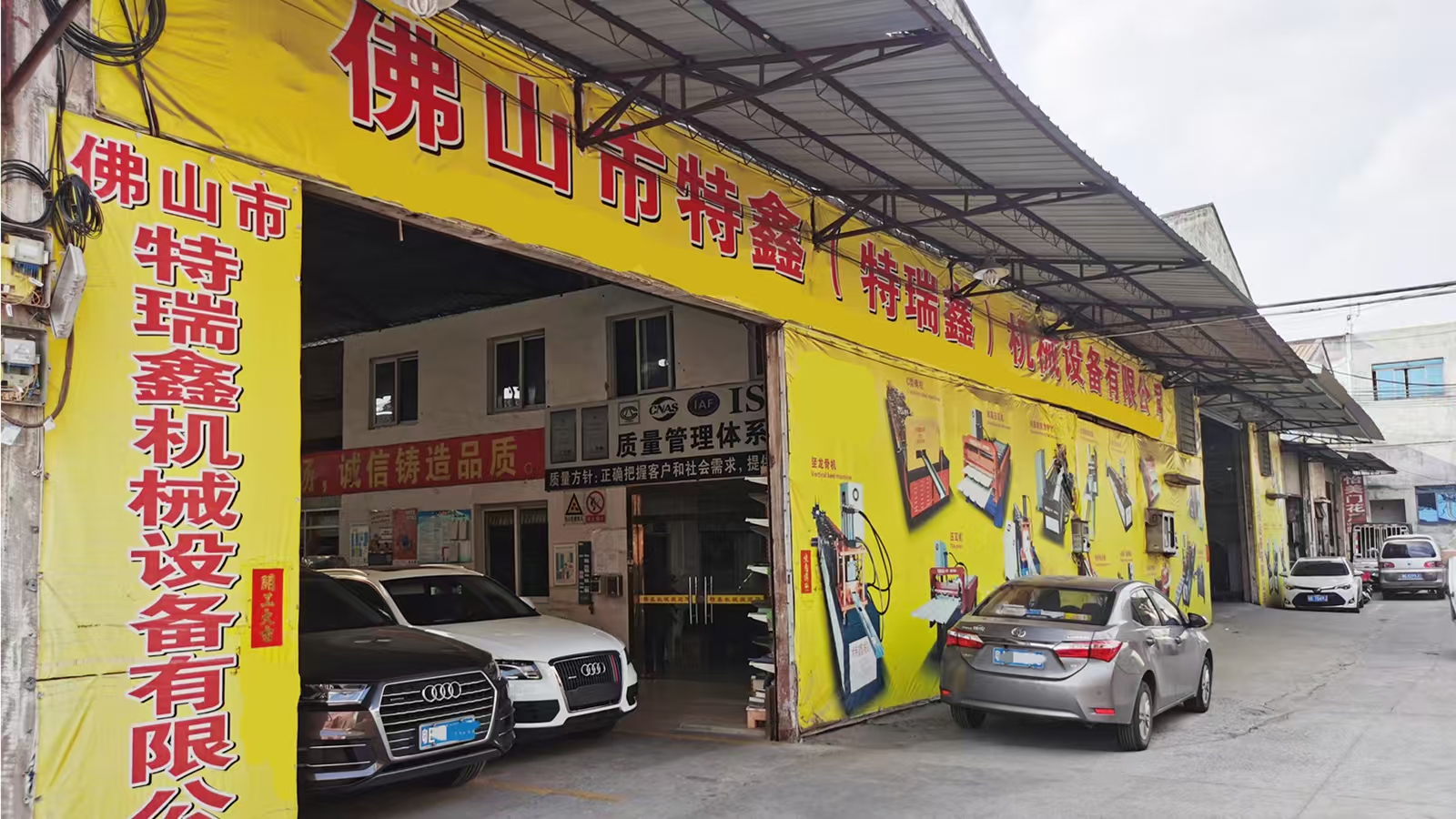
Material envelope, station count and shaft sizing can be reviewed against a specific door programme before an order is placed.
Next Step: Have Your Material Envelope Reviewed Against a Line Specification
Send the panel profile drawing together with the strip width, material type, thickness range and yield strength range. The engineering team at Foshan Texin Machinery Equipment Co., Ltd. will review how many forming stations, what shaft sizing, which roll material and which drive configuration the envelope actually requires.
Email: sales@texinjixie.com | Tel / WhatsApp: +86 186-7573-3219 | WhatsApp: +86 134 1548 2815 | Website: www.gdtxjx.com
Product catalogue (PDF): Download the Texin product introduction
Conclusion
Strip width, material thickness and yield strength are not background details in roll-up door panel forming. They are the inputs that determine how much bending load the line must carry at every pass, and therefore how much rigidity the shafts, bearings, frame, rolls and drive must provide. Strip width drives the unsupported span and the shaft diameter required to resist deflection. Thickness drives the number of forming stations and the power needed to bend the material in safe increments. Yield strength drives the overbend allowance in the roll design and the gradual, multi-station application of that overbend.
The practical decision rule is straightforward: define the full material envelope first, size the line against the heaviest combination inside it, and then verify the assumptions with a sample or pre-shipment run on the real coil. A quotation that explains its station count, shaft sizing and roll material in relation to the buyer's material is a technical answer. A quotation that lists only the profile and the output speed is an incomplete one. The company product catalogue can be downloaded as a PDF, and technical questions on material envelopes can be directed to sales@texinjixie.com.
Have Questions or Need More Details?
Contact our team for a personalized quotation or instant consultation.
Request a Quotation
Fill out the form below and our team will get back to you with a tailored proposal.
WhatsApp Direct Chat
Prefer to chat in real-time? Message us on WhatsApp for instant assistance & quick answers.
- Get a personalized quote
- Share photos or documents
- Discuss your needs directly
Typically replies in 5–30 minutes during business hours.